
Politics
Trump Orders Review of Biden-Era Refugees Including Kenyans
The review aims to reassess vetting procedures, national security considerations, and compliance with immigration guidelines.

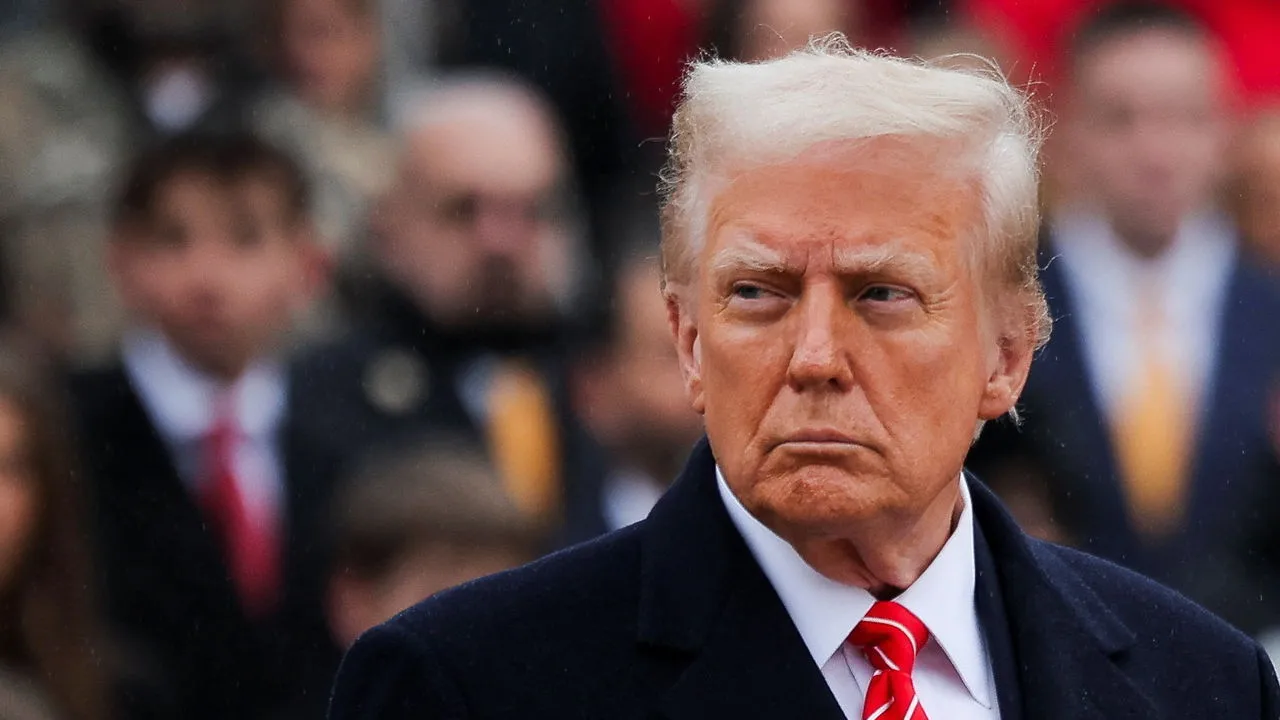
Former U.S. President Donald Trump has directed a comprehensive review of refugee admissions approved during the Biden administration. The directive includes cases involving refugees from several countries, among them Kenya, prompting global attention and concern within affected communities.
The review aims to reassess vetting procedures, national security considerations, and compliance with immigration guidelines. Although details of the reassessment are still emerging, the move has already triggered debate among immigration advocates, policy experts, and diaspora groups.
Why the Review Is Taking Place
According to officials familiar with the directive, the review focuses on three main areas:
-
Security Vetting:
The evaluation seeks to determine whether the screening processes used during the Biden era met Trump-era security standards. -
Policy Alignment:
The Trump team argues that refugee policies expanded under President Biden may need to be re-aligned with “America First” immigration priorities. -
Program Integrity:
The review intends to verify documentation, eligibility status, and background checks of refugees admitted during the previous administration.
While the review does not automatically reverse refugee status, it may affect pending applications, appeals, or ongoing resettlement cases.
Impact on Kenyan Refugees
Kenyans form a notable portion of African refugee and asylum applicants in the U.S., often through humanitarian programs linked to political instability, economic challenges, or community-based persecution.
The reassessment could affect:
-
Pending Kenyan resettlement applications
-
Approved Biden-era cases awaiting relocation
-
Family reunification petitions
-
Refugees already in the U.S. but still undergoing final processing
Immigration attorneys advise affected individuals to remain updated through official immigration channels and to consult legal support if their case falls under the review period.
Reactions and Concerns
The directive has sparked mixed reactions.
-
Advocacy groups have expressed concern that the review may slow down resettlement, increase processing backlogs, and create uncertainty for vulnerable refugees.
-
Supporters of the review argue that a policy check is necessary to ensure transparency, national safety, and proper use of U.S. immigration resources.
-
Diaspora communities, especially Kenyans living in the U.S., are watching closely, as any policy shift may influence future migration patterns.
What Happens Next?
The review process is expected to include:
-
Case-by-case evaluations
-
Re-verification of background information
-
Potential policy revisions for future refugee admissions
However, officials indicate that no immediate mass changes will occur until assessments are complete.
Conclusion
The directive by Donald Trump to review Biden-era refugee admissions — including those involving Kenyans — marks a significant development in U.S. immigration policy discussions. While the review may not result in immediate changes, it introduces a period of uncertainty for applicants and families awaiting decisions. As the process continues, affected individuals are encouraged to seek verified updates and proper legal guidance.

Politics
Ugandan Opposition Leader Kizza Besigye Hospitalized as Political Tensions Rise
Ugandan opposition leader Kizza Besigye has been hospitalized amid growing fears of repression following threats by the army chief.
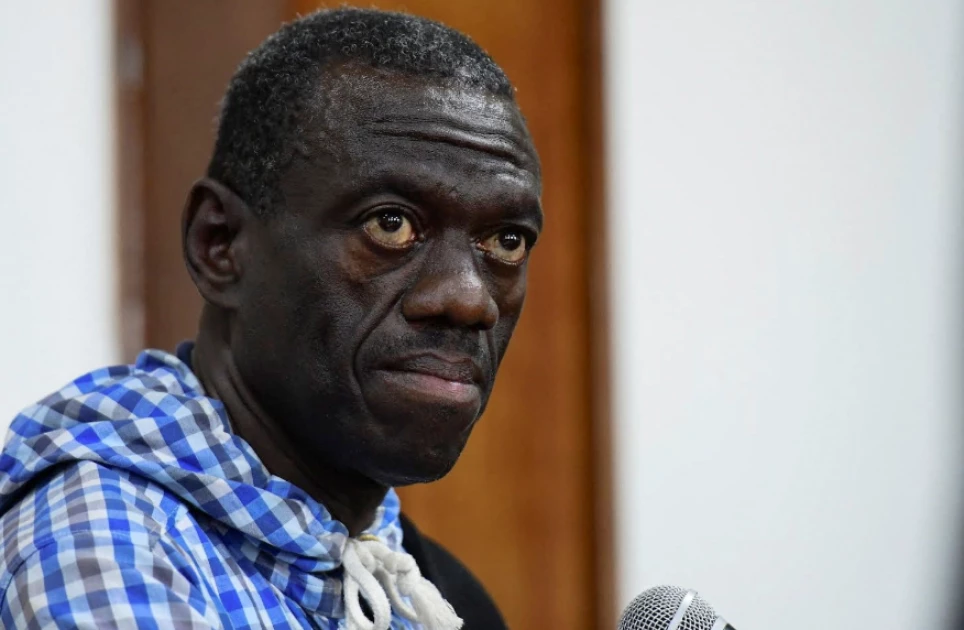
Kampala, Uganda — Veteran Ugandan opposition leader Kizza Besigye was rushed from Luzira Prison to a private clinic in Kampala on January 20 after developing severe abdominal pain, fever, and dehydration, according to his political party and family members.
Besigye, a four-time presidential challenger, has been in detention since November 2024 on treason-related charges. His party said his condition is critical and disputed official statements that described the hospital visit as a routine medical check-up.
His wife, Winnie Byanyima, linked the deterioration of his health to what she described as sustained political pressure following Besigye’s opposition to plans she says would entrench family succession in Uganda’s leadership.
Party Rejects Official Account of Medical Visit
Ugandan prison authorities confirmed that Besigye was taken to a medical facility but downplayed the seriousness of his condition. Opposition figures, however, accused the state of minimizing a medical emergency and called for his immediate release on humanitarian grounds.
Supporters say Besigye has faced prolonged stress and inadequate medical care during his detention, raising broader concerns about the treatment of political detainees in the country.
Military Rhetoric Fuels Fears
The health scare comes amid heightened political tensions following Uganda’s disputed January 17 election, which extended the rule of President Yoweri Museveni.
Concerns intensified after screenshots of now-deleted social media posts attributed to Muhoozi Kainerugaba, the army chief and son of the president, circulated online. The posts appeared to boast about the killing of opposition figures and warned of further violence.
The Ugandan military has not formally addressed the screenshots, but opposition leaders and civil society groups say the rhetoric has contributed to an atmosphere of fear and intimidation.
Regional and International Concern
Human rights organizations and opposition parties have called for independent medical access to Besigye and urged international observers to closely monitor the situation. They warn that inflammatory statements by senior security officials, combined with the detention of opposition leaders, risk further destabilizing the country.
As of publication, Besigye remained under medical observation in Kampala, with his party demanding transparency over his condition and guarantees for his safety.
Business
Rethinking Safaricom’s Future: Value Creation, National Interest, and the Global Capital Question
Safaricom’s future should be shaped by deliberate strategy, not political soundbites or short-term market excitement.

A recent public statement by Ndindi Nyoro has stirred a necessary conversation about the long-term structure and valuation of Safaricom. The proposal—either separating Safaricom’s telecom and fintech businesses or pursuing a listing on the London Stock Exchange—touches a nerve because it challenges how Kenya treats its most strategic corporate asset.
This is not merely a corporate finance debate. It is a question about how Kenya positions its flagship companies in a world where capital, technology, and competition are increasingly global.
Safaricom Is No Longer “Just” a Telco
Safaricom has evolved into a multi-layered platform:
-
A national communications backbone
-
A digital payments and financial services ecosystem
-
A key enabler of SMEs, government services, and household transactions
Housing these businesses under one corporate umbrella has delivered scale and resilience. However, it may also be masking the true value of each line of business. Global investors tend to discount conglomerates when growth profiles and risk characteristics differ significantly within the same company.
The Case for Separation: Clarity Over Complexity
Separating telecom operations from fintech would create two fundamentally different companies:
-
Telecom: Capital-intensive, regulated, predictable cash flows.
-
Fintech: Technology-driven, faster growth, regionally scalable, and often valued at higher multiples.
From an investor’s perspective, clarity matters. A focused fintech entity could pursue partnerships, innovation, and expansion without being weighed down by infrastructure economics. Conversely, a standalone telecom business could be valued for stability and dividends rather than growth expectations.
That said, separation is not without cost. Operational dependencies, shared data, and integrated customer journeys would need careful re-engineering. A rushed split could destroy more value than it creates.
The Global Listing Argument: Visibility and Price Discovery
Listing Safaricom on a global exchange such as London would dramatically increase its exposure to international capital. It would place the company alongside global peers rather than limiting valuation benchmarks to regional markets.
Potential benefits include:
-
Access to deeper and more diverse investor pools
-
Improved price discovery
-
Enhanced global credibility
However, global visibility comes with trade-offs. Kenya would need to manage concerns around local investor dilution, currency exposure, and the optics of a national champion being priced primarily outside its home market.
Safaricom and the National Economy
Safaricom occupies a unique position in Kenya:
-
It supports government revenue streams
-
It underpins financial inclusion
-
It acts as critical digital infrastructure
Because of this, decisions about its structure cannot be made on valuation alone. Any restructuring must align with national policy objectives, regulatory capacity, and public confidence.
This is where the debate becomes nuanced: maximizing shareholder value must be balanced against safeguarding systemic importance.
A More Measured Way Forward
Rather than choosing between an immediate split or a foreign listing, Kenya could consider incremental steps:
-
Ring-fence fintech operations with separate financial reporting
-
Introduce partial spin-offs while retaining strategic control
-
Explore dual listings to protect domestic participation
-
Strengthen disclosures to reduce valuation opacity
Such an approach allows the market to test assumptions without placing the entire institution at risk.
Conclusion: A Debate Worth Having—Carefully
The ideas being discussed are not radical by global standards. Similar strategies have unlocked value in other markets. The danger lies not in questioning Safaricom’s structure, but in oversimplifying the solution.
Safaricom’s future should be shaped by deliberate strategy, not political soundbites or short-term market excitement. If Kenya gets this right, it can demonstrate that African champions do not have to choose between national relevance and global ambition—they can achieve both.
Politics
Ruto Reaffirms Mt Kenya Ties as ODM Faces Internal Tensions
Kenya’s political arena is heating up as President William Ruto tours Mt Kenya, reaffirming his connection with the region, while opposition parties deal with internal disagreements ahead of the 2027 general elections.
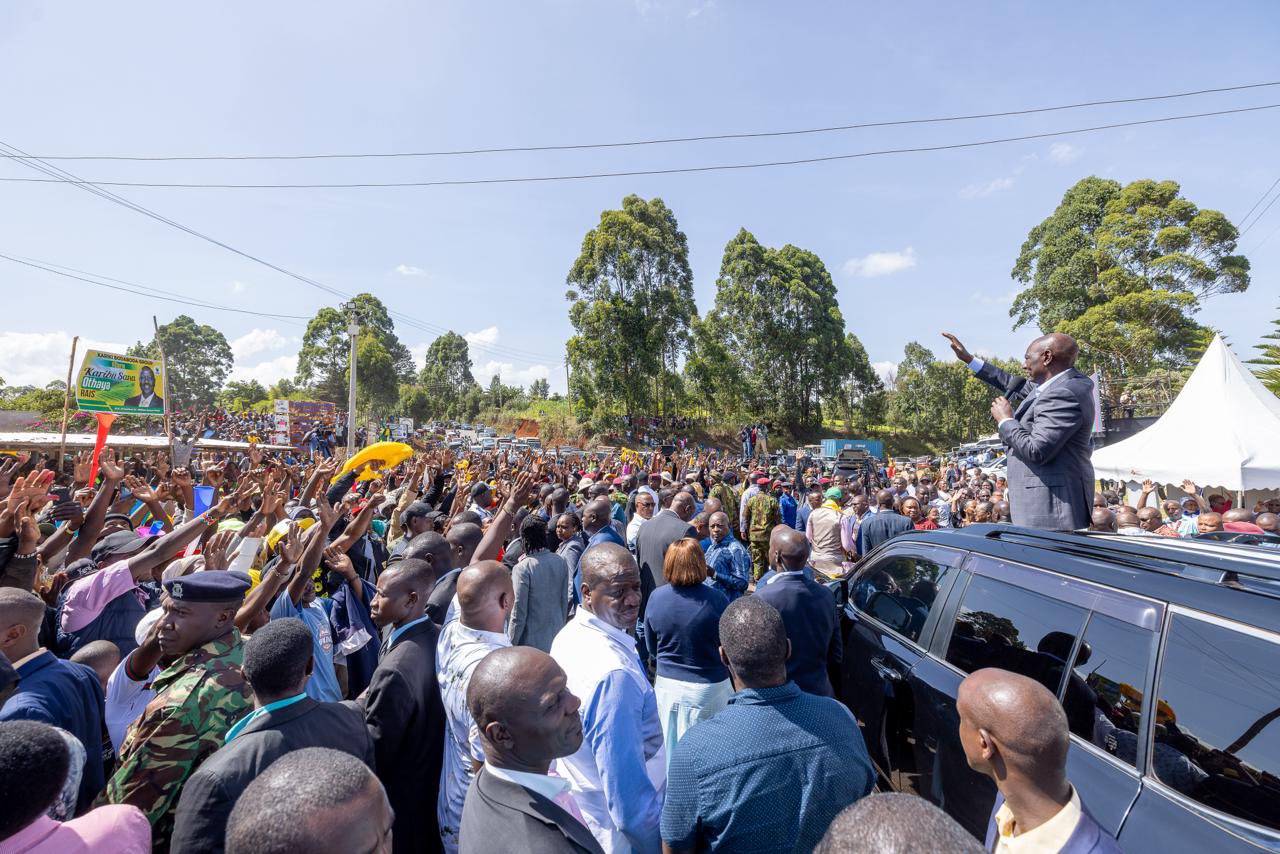
Kenya’s political arena is heating up as President William Ruto tours Mt Kenya, reaffirming his connection with the region, while opposition parties deal with internal disagreements ahead of the 2027 general elections.
Ruto Stands Firm in Mt Kenya
On Sunday, January 11, President Ruto addressed residents at ACK St Paul’s Church Kariki in Othaya, Nyeri County, home turf of his deputy, Rigathi Gachagua. The president dismissed claims that attempts are being made to weaken his support in the region. He described such efforts as “petty politics” that cannot shake the bond he has built with local communities.
Ruto emphasized that the strong relationship with Mt Kenya voters, which was evident in the 2022 general election, remains intact. He urged political actors to abandon divisive strategies, stating that his connection with the people is grounded in shared trust and mutual respect.
“The friendship we have cultivated here is solid. No amount of noise or falsehood can destroy what we have built,” he said.
ODM Confronts Internal Disputes
Meanwhile, the Orange Democratic Movement (ODM) has convened a high-level meeting on the Coast to address tensions within the party. The Central Management Committee (CMC) is tasked with managing disputes, including rumors about attempts to remove Senator Oburu Oginga as party leader.
Party leaders are also discussing their approach to the broad-based government partnership with President Ruto and strategizing for the 2027 elections. Deputy party leader Godfrey Osotsi reportedly requested a postponement due to official duties but was overruled.
State House Disagreement Makes Headlines
Political maneuvering has also reached State House, Nairobi, where reports suggest a clash between Suba North MP Caroli Omondi and Suna East MP Junet Mohamed. Sources indicate that Junet confronted Omondi for meeting with Head of Public Service Felix Koskei without his approval. The disagreement reportedly became heated, though a senior ODM female official intervened to deescalate the situation.
Governor Kahiga Clarifies Political Position
In a related development, Nyeri Governor Mutahi Kahiga addressed questions about his political alignment during Ruto’s visit. Kahiga clarified that despite his association with Gachagua’s party, he remains a member of the United Democratic Alliance (UDA) and continues to support President Ruto.
“I am still a UDA member, and that is a fact. I respect the president and remain committed to the party,” Kahiga said.
The Road Ahead
As President Ruto consolidates his support in Mt Kenya, and ODM attempts to resolve internal disputes, the stage is set for a dynamic political environment in the lead-up to 2027. Observers note that both ruling and opposition parties are carefully navigating alliances, loyalty, and regional support to strengthen their position for the next general election.

Discovering South Africa’s Garden Route: A Scenic Coastal Wonder Worth Exploring

Ugandan Opposition Leader Kizza Besigye Hospitalized as Political Tensions Rise

Rethinking Safaricom’s Future: Value Creation, National Interest, and the Global Capital Question

-

 Fashion9 years ago
These ’90s fashion trends are making a comeback in 2017
-

 Entertainment8 months ago
In Memoriam: Sally Kirkland (1941-2025)
-

 Entertainment6 months ago
The Carter Efe–Elma Controversy: Allegations, Accountability, and the Line That Must Not Be Crossed
-
Sports9 years ago
Boxing continues to knock itself out with bewildering, incorrect decisions
-
 Business6 months ago
Discovering South Africa’s Garden Route: A Scenic Coastal Wonder Worth Exploring
-
 Business8 months ago
Safaricom Launches First Bond Under Its Sh40 Billion Medium-Term Note Programme
-
Sports9 years ago
Steph Curry finally got the contract he deserves from the Warriors
-

 Education9 months ago
The Top 10 Best Primary Schools in Kenya: A Comprehensive Guide for Parents